Showcase · concept case study
An operator's screen, designed for an acquirer's questions.
VettX Dashboard Concept is an independently developed, uncommissioned concept by Digital Boutique AI. It is not sponsored, approved, or endorsed by VettX, it uses fictional data, and it does not represent a production deployment. VettX is a trademark of its owner, used here for identification only.
The starting point was a category pattern rather than a brief: subscription software for vehicle dealerships whose results are real but slow to prove, with finance, sales, customer-success and product-usage data spread across tools that disagree. DBAI explored what a command tier and a transaction workspace would look like if both were designed from the start to answer an outside reader's questions.
- Property
- VettX Dashboard Concept — independent, uncommissioned concept case study
- Data
- Fictional throughout; nothing shown describes a real company
- Built on
- The Exit Command prototype codebase, audited read-only for the write-up
- Role
- Concept, data model, interface, research workflow and the constraint system behind them
Independent concept · Fictional data
The build, counted from the code
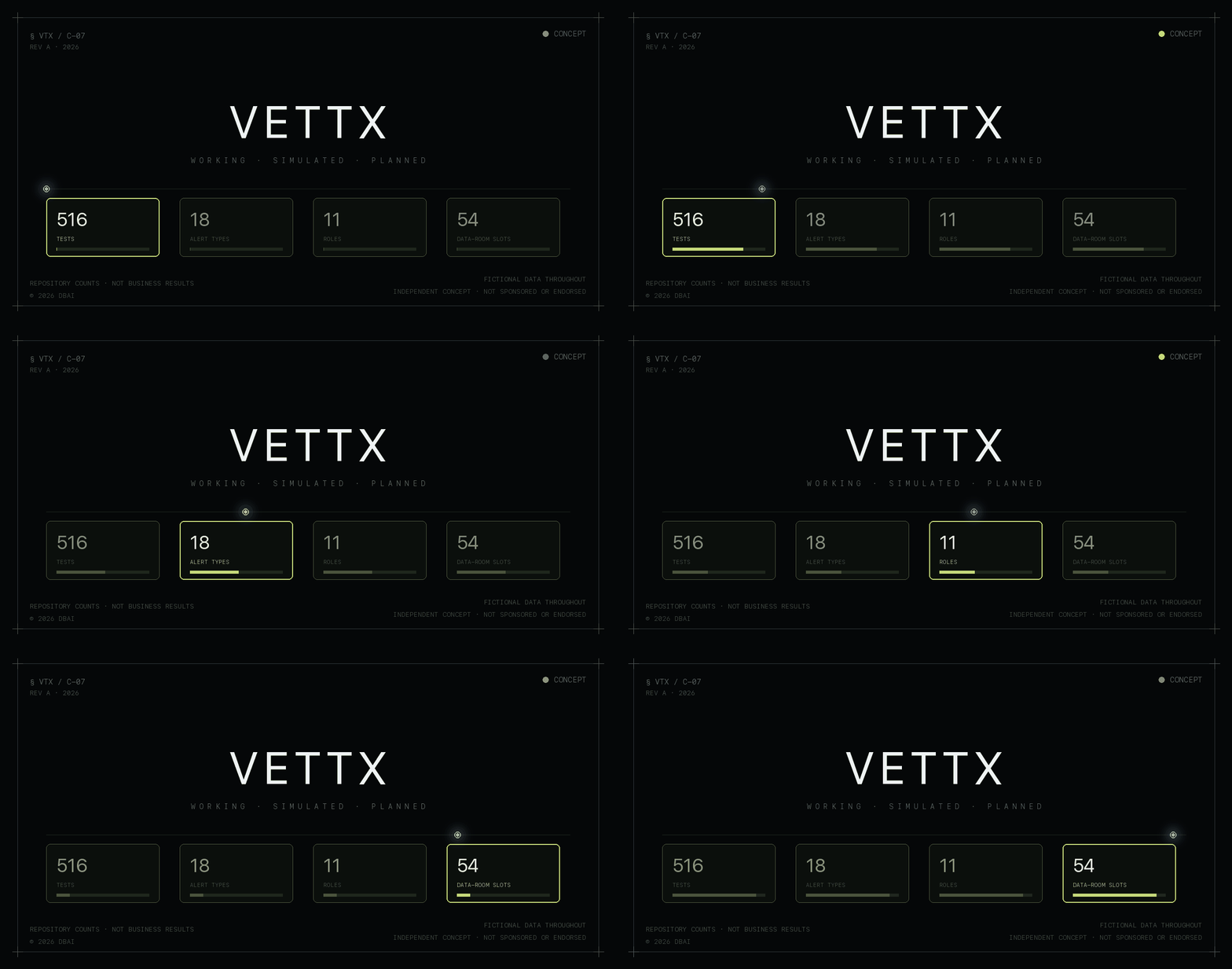
The build
Counted from the code, not from the brief.
These figures describe the prototype's repository. They are properties of the build, not results.
- unit tests
516
unit tests
run and passing in a clean clone; many assert that the system refuses correctly
- alert types
18
alert types
evaluated daily against stored records and delivered in the app
- roles
11
roles
read from the database on every request, with access denied by default
- mandatory data-room slots
54
mandatory data-room slots
across 16 sections, each tracked until it is filled
01 · Design decisions
A blank that says why beats a number nobody can defend.
In a sale process a confident wrong number costs more than an honest gap, so the concept is built around what it refuses to assert.
Unverified figures stay off the chart
A financial figure with no recorded source is stored but not plotted, and its card says the source is unverified. A missing value renders as an em dash, and anything modeled carries a Modeled badge wherever it appears.
Research proposes, a person decides
A proposed change to a buyer's tier or scores, or a proposed new internal initiative, waits in an approvals queue with its previous value, proposed value, reason and evidence. Nothing moves until a person decides.
Confidence only falls
A claim's confidence is the lowest of what was proposed, what its best source supports and what its class allows, so repeating an inference across research runs cannot turn it into a fact.
A run that finds nothing is a success
Scheduled research asks what changed since the last verified baseline. A run with nothing material reports no material change, creates no tasks or proposals, and has tests asserting exactly that.
02 · Working · Simulated · Planned
The line between built and not built, drawn from the code.
Each capability was checked against the repository. Where the brief and the code disagreed, the code won and the write-up says so.
| Capability | State | Note |
|---|---|---|
| Command Center, Executive Mode and daily brief | Working | Run in the prototype; every figure shown is fictional. |
| Buyer tracking, 26-stage pipeline and relationship graph | Working · Simulated | The code runs; the demo universe is invented organizations. |
| Delta-first research with A–D source grading | Working · Simulated | Runs on Anthropic Claude and Tavily; without keys it uses deterministic stand-ins graded D, which cannot move a score. |
| Approvals, roles and audit trail | Working | Three summary screens still check sign-in rather than a specific permission. |
| Alert delivery outside the app | Planned | Alerts are in-app notifications only. |
| Live connectors to accounting, customer-success, customer relationship management and product-usage systems | Planned | Not built; figures are entered by hand. |
| Watchdog rules against live operating data | Planned | Not built; the alert engine evaluates stored records against fixed thresholds. |
No business outcome has been measured, because the concept has never run against a live deployment.
Why it is on this site
The standard is the point.
The hard part of an operating dashboard is not the chart. It is that every number on it has to survive someone asking where it came from, and most reporting layers were never built to answer that question.
This entry is a concept, not an engagement. Nobody commissioned it and no outcome is claimed. It is here to show the standard DBAI holds a reporting layer to, with the line between what runs and what does not drawn in the open.
The case study
Read the full write-up.
The case study covers both tiers, the design principles, the working, simulated and planned matrix, and what a commissioned version would involve. It carries the same disclosure as this page, at the top and again at the end.
The prototype's public walkthrough is at showcase.dbai.agency (opens in a new tab)
Make your numbers answerable.
Bring us the questions your reporting cannot answer yet, and we will show you what it takes to answer them defensibly.
Book a Discovery Call